 Skip to content
The most important AI breakthroughs in 2026 are not limited to larger models or more impressive chatbots. The deeper change is happening in the systems around AI: agent platforms, cloud infrastructure, software development, enterprise governance and search.
These shifts matter because they determine whether AI can move from a useful demo into a dependable part of real business operations.
1. AI Agents Are Becoming an Enterprise Platform Layer
The first major breakthrough is not that models can call tools. That capability has existed for some time. The change is that companies are building infrastructure specifically to deploy and manage agents across business systems.
OpenAI’s Frontier platform is one example of this direction. It is designed around building, deploying and governing AI agents that can work with enterprise data and applications.
OpenAI Frontier shows how the market is moving from standalone assistants toward managed agent systems.
This creates new opportunities, but it also changes the security model. A chatbot that generates text has limited reach. An agent with access to email, CRM records, cloud files or internal applications can take actions that affect real systems.
The breakthrough is therefore two-sided: more useful automation and a much stronger need for identity, permissions, audit logs and human approval.
2. Kubernetes Is Becoming Part of the AI Inference Stack
AI infrastructure is increasingly converging with cloud-native infrastructure.
The Cloud Native Computing Foundation reported in its 2026 annual survey release that Kubernetes production use had reached 82% among container users surveyed. It also reported that 66% of organizations hosting generative AI models were using Kubernetes for some or all inference workloads.
CNCF’s 2026 survey announcement provides the reported figures.
This matters because AI is becoming another production workload that platform teams must schedule, monitor, scale and secure. GPUs, model servers, vector databases, gateways and observability systems increasingly sit inside the same infrastructure conversation as traditional applications.
For enterprises, the advantage is operational consistency. The risk is importing all the complexity of cloud-native infrastructure into AI projects before teams have enough platform maturity to manage it.

3. AI Coding Is Moving Beyond Autocomplete
The next shift is in software development. AI coding tools are moving from line-by-line suggestions toward multi-step work such as codebase search, refactoring, migration assistance, testing and technical knowledge retrieval.
Amazon has published examples of generative AI being used internally to reduce developer waiting and accelerate large modernization tasks. The important point is not one headline productivity number. It is that AI is being applied to work around coding, not only to code generation itself.
AWS’s report on Amazon developer workflows provides examples of this shift.
This is a more useful way to measure AI in engineering. More generated code is not automatically better. Reducing upgrade work, repetitive transformations, documentation search and time spent understanding unfamiliar systems can create value without encouraging teams to ship unreviewed code faster.
4. Search Is Becoming a Conversational and Agentic Interface
Search is another area where AI has moved from an added feature into the core user experience.
At Search I/O 2026, Google described expanded AI Mode capabilities, agentic features and continued growth in AI-powered search. Google said AI Mode had passed one billion monthly users.
Google’s Search I/O 2026 announcement outlines those changes.
For publishers and businesses, this changes the search journey. Users can ask follow-up questions, compare options and complete more research within one conversational session.
It does not mean websites are irrelevant. Search systems still need high-quality sources, original information and pages users can visit when they need more depth.
The practical breakthrough is that search is becoming less like a list of documents and more like an interface that can reason across sources and help users complete tasks.
5. Governance Is Becoming a Product Feature, Not a Policy Document
Enterprise AI governance used to be discussed mainly as policy: what employees should and should not do.
In 2026, governance is increasingly built into the technology layer. Enterprise platforms now emphasize identity, data controls, model evaluation, logging, agent permissions, policy enforcement and administrative oversight.
This is important because AI use is becoming too broad to govern through training alone. An organization with hundreds of employees and many AI agents needs technical controls that can enforce policy consistently.
Strong governance does not guarantee safe AI. It makes responsibility and evidence more visible.
Useful controls include:
- approved model and tool catalogs
- centralized identity
- role-based access
- data classification
- agent permission boundaries
- human approval for high-impact actions
- evaluation before deployment
- logging and incident review
Our enterprise AI security gaps guide covers these controls in more detail.
6. Retrieval Is Becoming More Important Than Bigger Context Alone
Longer context windows are useful, but enterprises rarely want to dump every document into one prompt.
Production AI systems increasingly need controlled retrieval. The system should find the right information, respect permissions, identify the source and avoid mixing outdated material with current policy.
This shifts attention from “How much text can the model read?” to “Can the system retrieve the right evidence safely?”
The difference is critical for internal knowledge, customer support, legal workflows and technical operations.
A strong retrieval system needs:
- clean source documents
- clear ownership and review dates
- permission-aware search
- metadata that separates current and obsolete content
- citations or traceability back to the source
AI can make a bad knowledge base easier to query. It cannot make outdated information correct.
7. AI Economics Are Becoming an Architecture Problem
As AI moves into production, cost becomes more complicated than an API price.
A real AI workload can include model inference, vector storage, data pipelines, observability, GPUs, security controls, retries, caching and human review. Teams need to understand the total cost per successful business task, not only tokens or model calls.
That creates a new design discipline around routing. A difficult task may need an expensive model. A simple classification task may not. Some workloads can be cached. Others can run asynchronously. Some data should never leave a controlled environment.
The breakthrough is not cheaper AI by itself. It is smarter use of different models and infrastructure based on the value of the task.
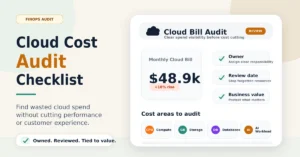
For cost controls, see our cloud cost audit checklist.

What Is Actually a Breakthrough and What Is Just Marketing?
A useful test is to ask whether a new capability changes one of four things:
| Test | Question |
|---|---|
| Capability | Can the system perform a task that was previously impractical? |
| Economics | Can it perform the task at a cost that makes production use realistic? |
| Reliability | Can the task be repeated with enough consistency for real workflows? |
| Integration | Can the capability work safely with existing data and systems? |
If a product only improves a benchmark but does not change capability, economics, reliability or integration for the intended user, it may be an incremental improvement rather than a meaningful enterprise breakthrough.
How Enterprises Should Evaluate New AI Capabilities
Instead of reacting to every model announcement, use a repeatable evaluation process.
- Start with a real workflow. Define the problem before looking at the model.
- Build a test set. Use representative and difficult examples from the actual task.
- Measure quality. Track accuracy, failure modes and human review burden.
- Measure cost. Include infrastructure, integration, monitoring and people.
- Check permissions. Confirm exactly which data and tools the system can reach.
- Plan for change. Models and pricing change quickly, so avoid unnecessary dependency where portability matters.
This process helps separate a useful breakthrough from a product announcement that has little effect on the business.
What to Watch Through the Rest of 2026
The most important areas to watch are agent reliability, AI security controls, infrastructure efficiency and the quality of enterprise evaluation methods.
Models will continue improving, but the harder problem is operational. Organizations need systems that can identify when an AI output is uncertain, constrain what agents can do and measure whether automation is actually improving a business process.
That is where much of the next wave of enterprise AI value will be created.
Final Takeaway
The biggest AI breakthroughs in 2026 are happening in the layers that turn models into infrastructure. Agents are gaining tools. Kubernetes is becoming part of AI production environments. Coding assistants are taking on larger workflows. Search is becoming conversational. Governance is moving into the product layer.
These changes are less flashy than one benchmark chart, but they matter more to organizations trying to use AI reliably at scale.
Author
Talha Qureshi is the founder and technology writer behind ITechTrove. He covers enterprise AI, cybersecurity, cloud infrastructure, B2B SaaS and emerging technology, focusing on practical guides, analysis and source-based reporting.
AI breakthroughs matter to publishers and enterprise buyers when they change how people discover information, build workflows or manage risk. To understand the search side, read our Google AI Search updates for publishers; to compare major model ecosystems, see OpenAI vs. Google vs. Anthropic.










2 thoughts on “AI Breakthroughs Reshaping Enterprise Technology in 2026”