 Skip to content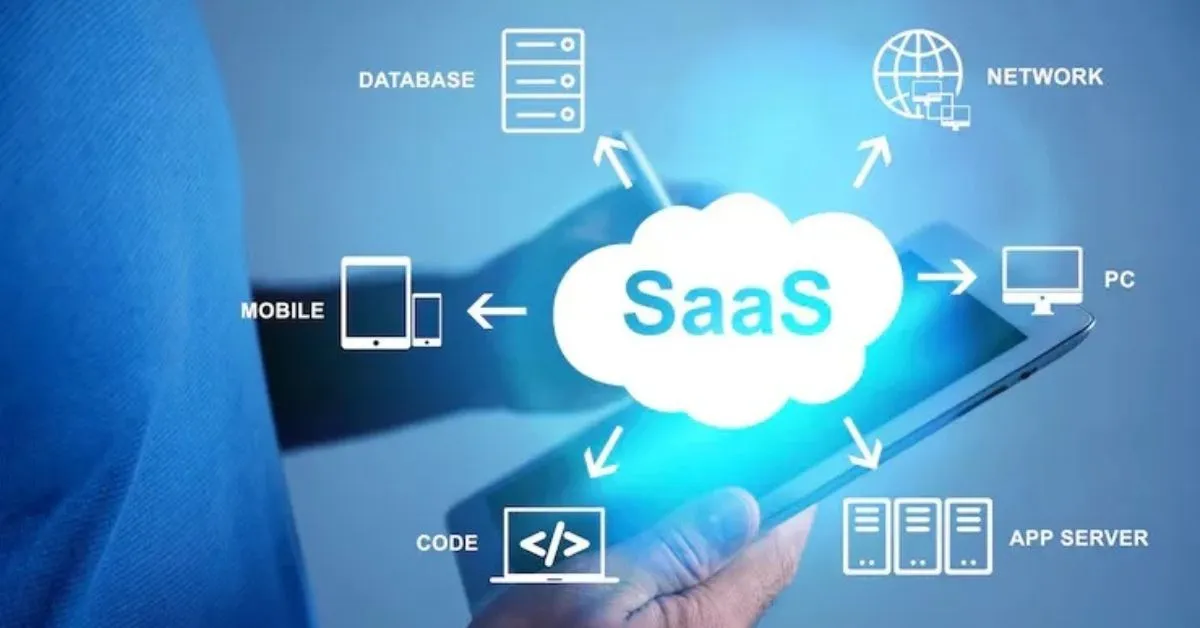
B2B SaaS software can help a company move faster without owning every layer of the technology stack. CRM, accounting, support, collaboration, analytics and workflow platforms can be deployed quickly and updated continuously by the vendor. The same convenience can also create a different problem: dozens of overlapping subscriptions, scattered data, weak access control and rising recurring cost.
The best SaaS stack is therefore not the one with the most applications. It is the smallest set of well-governed systems that supports the company’s real workflows, integrates cleanly and can be operated at a predictable total cost.
What B2B SaaS Software Actually Changes
Software as a service shifts several responsibilities from the customer to the vendor. The vendor normally operates the application infrastructure, delivers updates and manages service availability within the terms of the product. The customer still owns critical responsibilities such as account configuration, user access, data quality, workflow design, integration choices and vendor governance.
This shared operating model creates speed, but it does not remove the need for internal ownership.
The B2B SaaS Stack by Business Function
| Business Function | Typical SaaS Category | Primary Value | Common Risk |
|---|---|---|---|
| Sales | CRM, sales engagement, quoting | Pipeline visibility and follow-up | Duplicate customer data and poor adoption |
| Marketing | Automation, email, analytics, content | Campaign execution and attribution | Contact-based pricing growth and disconnected attribution |
| Customer support | Help desk, knowledge base, chat | Ticket routing and service visibility | Customer history split across multiple tools |
| Finance | Accounting, billing, subscription management, expense | Financial control and recurring-revenue operations | Integration and revenue-data inconsistency |
| Operations | Project management, workflow, procurement | Process coordination | Too many overlapping work-management tools |
| Collaboration | Messaging, meetings, documents | Communication and shared work | External sharing and unmanaged data |
| Analytics | BI, embedded analytics, data platforms | Decision visibility | Conflicting definitions and poor source data |
| Security and IT | Identity, endpoint, monitoring, device management | Control and visibility | Coverage gaps between business applications |
Start With a Capability Map, Not a Vendor List
Before purchasing another SaaS product, map the capability the business needs. A capability is a business outcome such as “manage the sales pipeline,” “approve expenses” or “track customer support requests.” A product is only one way to deliver it.
A useful capability map identifies:
- the business process;
- current system of record;
- users and owners;
- important integrations;
- critical data;
- existing tools that already provide similar functionality;
- measurable pain in the current process.
This prevents software procurement from becoming a sequence of isolated team decisions.
Define the System of Record
SaaS stacks become unreliable when several systems all claim ownership of the same business data. Decide where core objects are mastered.
| Data Object | Possible System of Record | Key Governance Question |
|---|---|---|
| Customer/account | CRM | Which system owns the canonical customer identity? |
| Invoice/payment | Accounting or billing platform | Which system determines financial truth? |
| Employee | HRIS or identity platform | What triggers access creation and removal? |
| Support case | Help desk | How is relevant customer context synchronized? |
| Product usage | Application/data platform | How is usage connected to customer and billing records? |
When ownership is ambiguous, integrations often produce duplicate or conflicting records.
Integration Quality Matters More Than Application Count
A SaaS stack is a network of data flows. Every new application increases the number of potential integrations, identities, permissions and failure points.
Before approving a product, map:
- what data enters the application;
- what data leaves it;
- which system owns each field;
- whether synchronization is one-way or two-way;
- what happens when an integration fails;
- whether the integration can create duplicates;
- who monitors the connection.
Native integrations can be useful but should still be tested. A marketplace listing does not guarantee that the connector supports the exact object, field or workflow the company requires.
For CRM-specific integration and adoption guidance, see CRM Software for Small Businesses: How to Choose the Right System.

SaaS Security Begins With Identity
Most SaaS applications are reachable from the public internet, which means access control cannot depend on an office network. Central identity, multi-factor authentication and lifecycle management should be foundational controls.
For important applications, evaluate:
- single sign-on support;
- multi-factor authentication;
- role and permission granularity;
- automated provisioning and deprovisioning where appropriate;
- audit logs;
- API and integration credentials;
- guest and external-user controls;
- session and device policies.
When an employee leaves, access should not depend on someone remembering every SaaS product the person ever signed up for.
Shadow SaaS Creates Hidden Risk and Cost
Teams can often purchase software with a credit card faster than IT or procurement can review it. This creates shadow SaaS: applications used for business without centralized visibility or governance.
Problems include:
- duplicate subscriptions;
- business data stored in unknown services;
- former employees retaining access;
- weak vendor contracts;
- unreviewed AI or data-processing features;
- integration credentials outside normal control;
- automatic renewals for unused products.
The goal is not to block every team purchase. It is to make approved procurement fast enough that employees do not need to bypass it.
Evaluate SaaS Vendors as Operational Dependencies
A SaaS vendor can become part of the company’s critical business infrastructure. Vendor evaluation should therefore cover more than features.
| Area | Questions to Ask |
|---|---|
| Product fit | Does the product support the real workflow without excessive customization? |
| Security | How are identity, encryption, logging, vulnerability management and incidents handled? |
| Reliability | What availability commitments exist and what is the service’s incident history? |
| Data | Where is data stored, who can access it and how can it be exported? |
| Integration | Are APIs and connectors sufficient for current and future workflows? |
| Support | What support channels and response expectations apply at the chosen tier? |
| Commercial | What drives price growth: seats, contacts, storage, transactions, usage or features? |
| Exit | How difficult and expensive will it be to migrate away? |
Total Cost of Ownership Is More Than Subscription Price
A $30-per-user application is not necessarily cheaper than a $60-per-user application if it requires several add-ons and manual workarounds. SaaS TCO should include:
- base subscriptions;
- premium features;
- usage or consumption charges;
- contact, transaction, storage or API limits;
- implementation;
- data migration;
- integration tooling;
- administrator time;
- training;
- support upgrades;
- expected user growth;
- renewal assumptions.
Companies with many recurring applications should also use SaaS subscription management practices to track ownership, renewal dates, usage and spend.
Use a Three-Year Cost Curve
Year-one pricing can be misleading because the company may receive implementation discounts or start with fewer users and features. Build a three-year model with realistic growth.
At minimum, model:
- current users;
- expected user growth;
- higher feature tiers likely to become necessary;
- usage growth;
- implementation and migration cost;
- renewal assumptions;
- cost of complementary tools.
This helps procurement compare platforms on expected operating economics rather than an introductory quote.
Avoid SaaS Sprawl With a Rationalization Framework
Quarterly or twice-yearly reviews can identify overlapping and unused products. Each application should have:
- a named business owner;
- a technical or security owner where appropriate;
- a defined capability;
- active-user and usage data;
- annual cost;
- renewal date;
- integration map;
- data classification;
- retirement or exit plan.
If no one can identify the owner or business capability, the subscription deserves investigation.
Adoption Should Be Measured, Not Assumed
A software license creates value only when people use the system for the process it was purchased to support. Login counts are not enough. A user may log in while still maintaining the real workflow in spreadsheets.
Measure adoption through business behavior:
- percentage of deals maintained in the CRM;
- percentage of invoices processed through the approved workflow;
- percentage of support requests entering the help desk;
- time spent on manual reconciliation;
- number of duplicate systems still used outside the platform.
AI Features Need the Same Governance as the Rest of the SaaS Stack
Many SaaS vendors are adding generative AI, agents and automated recommendations. These features can improve productivity, but they may introduce new data flows and permissions.
Before enabling an AI feature, ask:
- What customer or company data does it access?
- Is the data used to train vendor models?
- How long are prompts and outputs retained?
- Can the AI take actions or only recommend them?
- Which user permissions does it inherit?
- Can administrators disable or limit the feature?
- Are actions logged?
- Does enabling the feature create additional usage charges?
AI convenience should not bypass normal procurement and security review.
Design Exit Before You Need It
Vendor lock-in becomes expensive when the company has no idea how to leave. Before adoption, understand:
- data export formats;
- API access;
- attachment and file export;
- historical activity export;
- custom objects and fields;
- integration dependencies;
- contract termination terms;
- data deletion after termination.
Not every dependency is bad. Deep use of a strong platform can create operational value. The important question is whether the dependency is understood and justified.
A B2B SaaS Selection Scorecard
| Category | What to Score |
|---|---|
| Workflow fit | How well the product supports the actual process |
| Adoption | Usability and effort required from normal users |
| Integration | Quality of APIs, connectors and data synchronization |
| Security | Identity, permissions, logging and data controls |
| Reliability | Availability and operational dependency risk |
| Governance | Administration, auditability and lifecycle management |
| Economics | Three-year TCO and pricing growth drivers |
| Portability | Data export and switching difficulty |
| Vendor quality | Support, roadmap and commercial transparency |
A Practical SaaS Procurement Workflow
- Define the business capability and current pain.
- Check whether an existing approved tool already solves it.
- Map required data and integrations.
- Shortlist products using must-have criteria.
- Run a real workflow pilot.
- Review security, privacy and contractual terms.
- Build a three-year cost model.
- Define implementation, migration and ownership.
- Document success metrics.
- Record the renewal and exit plan before signing.
Common B2B SaaS Mistakes
- choosing products because competitors use them;
- buying overlapping tools for different departments;
- treating integrations as an afterthought;
- allowing multiple systems to own the same data;
- ignoring access removal for former employees;
- comparing only first-year subscription price;
- assuming AI features are automatically safe because they are built into an approved SaaS product;
- renewing software without checking utilization;
- failing to plan data export and migration.
For B2B SaaS teams, the software stack should support measurable growth as well as secure workflows: track acquisition cost, retention, gross margin and the operating cost of each customer segment before adding another tool. Our B2B SaaS growth guide explains how AI usage and unit economics change that decision, while the AI CRM buying framework covers a common customer-data layer.
Conclusion
B2B SaaS software can make a company faster and more flexible, but every subscription also creates a long-term operating dependency. The strongest SaaS strategy is built around business capabilities, clear systems of record, controlled identity, reliable integrations and disciplined cost ownership.
Instead of asking which SaaS product has the most features, ask which combination of products creates the cleanest operating system for the business. A smaller, integrated and well-governed stack usually creates more value than a large collection of applications purchased one problem at a time.


2 thoughts on “B2B SaaS Software: How to Build a Secure, Cost-Efficient Software Stack”