 Skip to content
Scaling a SaaS business creates new financial risk at the same time it creates new revenue. More customers usually mean more cloud usage, more software subscriptions, more vendors, more contracts, and more compliance obligations. If governance does not grow with the business, costs become harder to see and harder to control.
The financial risk of scaling SaaS without governance controls is not limited to wasted software licenses. It can affect margins, forecasting, audit readiness, security, vendor leverage, and the quality of decisions made by finance and leadership.
Why SaaS Growth Makes Financial Risk Harder to See
Growth adds complexity faster than most teams expect. Engineering may add infrastructure for performance. Marketing may adopt new tools for campaigns. Sales may buy workflow software. Support may introduce another platform for customer operations.
Each decision can make sense on its own. The problem appears when no one has a complete view of contracts, usage, renewals, owners, and total cost.
Without that view, finance often sees the result only after invoices arrive. That makes cost management reactive instead of planned.
Vendor Sprawl Creates Hidden Cost
Vendor sprawl happens when different teams buy overlapping tools or keep subscriptions that are no longer used. The financial damage is rarely caused by one large purchase. It usually comes from many smaller contracts that are never reviewed together.
Common warning signs include:
- multiple tools solving the same problem
- licenses assigned to inactive users
- renewals with no clear owner
- contracts bought by individual departments without central visibility
- premium plans used for features the team does not need
A simple inventory of active SaaS tools, owners, contract dates, license counts, and usage can expose a surprising amount of waste before any advanced governance system is added.
For a deeper look at this problem, see our guide to SaaS subscription management tools.
Cloud Costs Can Grow Faster Than Revenue
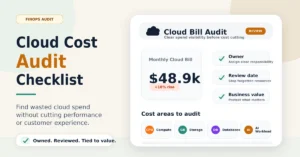
Cloud infrastructure is another major source of financial risk. As usage grows, teams may add compute, storage, databases, observability, backups, and data transfer without a clear cost model for each customer or workload.
That can create a dangerous pattern. Revenue increases, but infrastructure cost per customer also rises. The company appears to be scaling while gross margin quietly gets worse.
The answer is not to reduce infrastructure blindly. The goal is to understand what is driving cost.
Useful controls include:
- tagging cloud resources by team, product, or environment
- setting budgets and alerts
- reviewing idle and oversized resources
- tracking unit costs such as cloud cost per active customer
- making engineering teams aware of cost alongside performance

Shadow IT Adds Financial and Security Exposure
Shadow IT refers to software or cloud services adopted outside normal approval and visibility processes. It can help employees move quickly, but it also creates several problems at once.
Finance may not know the contract exists. Security may not know what data is being stored. Legal may not know the vendor terms. IT may not know who owns the account if the employee leaves.
That creates more than a budgeting issue. It can also affect data handling, access control, audit readiness, and vendor risk management.
A useful governance model does not ban every new tool. It creates a lightweight process for approving, documenting, and reviewing them.
Poor Contract Governance Weakens Negotiating Power
A company with poor vendor visibility often negotiates one contract at a time. That makes it harder to see duplicate products, combine purchasing power, or challenge unnecessary upgrades.
Central contract visibility improves negotiating leverage because procurement and finance can see:
- total spend with each vendor
- renewal dates
- unused licenses
- overlapping tools
- which teams actually depend on the product
This information is useful before renewal because the company can negotiate from evidence instead of assumptions.
Weak Governance Makes Forecasting Less Reliable
Forecasting becomes harder when recurring costs are scattered across departments and cloud usage changes without clear ownership.
A finance team may know total software spend but still struggle to answer basic questions such as:
- Which costs will increase as customer usage grows?
- Which contracts renew next quarter?
- Which costs are fixed and which are usage-based?
- Which tools are essential and which can be reduced?
Governance improves forecasting because it gives finance a cleaner view of what drives cost and when those costs are likely to change.
Compliance Risk Can Become a Financial Problem
Governance also matters when a SaaS company handles regulated data or operates across different jurisdictions.
Privacy, security, financial reporting, and industry-specific requirements can create direct costs when controls are weak. The exact rules depend on the country, industry, and type of data involved, so companies should not treat one compliance framework as universal.
The practical point is simpler. If a company cannot identify which vendors process sensitive data, who owns those contracts, and what controls apply, compliance work becomes slower and more expensive.
For public companies in the United States, financial reporting controls can also affect how procurement and software spending are documented. Governance should be designed with the company’s actual legal and reporting obligations in mind rather than copied from a generic checklist.
Governance Should Connect Finance, IT, Security, and Procurement
SaaS governance fails when one department owns the policy but other teams work around it.
Finance understands budgets and forecasts. IT understands systems and ownership. Security understands data and access risk. Procurement understands contracts and negotiations.
A useful governance process brings those views together without creating unnecessary delay.
A practical operating model can include:
- one owner for every SaaS application
- a central contract and renewal register
- clear approval thresholds
- security review for tools that handle sensitive data
- usage review before renewal
- quarterly review of duplicate or low-use tools
- cloud cost ownership by team or product

A Simple SaaS Governance Framework
A company does not need a complicated governance program to get started. The first version can be simple.
1. Build a complete inventory
List every major SaaS product, cloud account, contract owner, renewal date, user count, and annual or monthly cost.
2. Assign ownership
Every tool should have a business owner and, where needed, a technical or security owner.
3. Define approval rules
Small low-risk purchases may need a lightweight process. High-cost or sensitive tools should require broader review.
4. Review usage before renewal
Do not renew based only on last year’s contract. Check active users, feature usage, support tickets, business dependence, and alternatives.
5. Track unit economics
Measure the costs that scale with customers, transactions, data, or usage. This helps leadership see whether growth is improving or weakening margin.
6. Report exceptions
Governance works better when teams can see unusual spend, unowned tools, overdue reviews, and high-risk vendors before they become emergencies.
Governance Is Not the Same as Bureaucracy
Poor governance creates friction because every decision requires approval from too many people. Good governance does the opposite. It makes routine decisions faster because the rules are already clear.
The goal is not to stop teams from buying useful software. The goal is to make cost, ownership, security, and renewal decisions visible before they become expensive problems.
That distinction matters during rapid growth. A process that is lightweight at 50 employees may fail at 500. Governance should evolve with the business rather than appear only after a cost or compliance problem.
What Leadership Should Review Each Quarter
A quarterly governance review can focus on a small set of questions:
- Which SaaS and cloud costs are growing faster than expected?
- Which contracts renew in the next 90 days?
- Which tools have low adoption or duplicate another product?
- Which vendors handle sensitive or regulated data?
- Which teams lack clear cost ownership?
- Are cloud unit costs improving as the business scales?
These questions create a stronger connection between growth and financial discipline than a generic annual software audit.

The Financial Risk of Scaling SaaS Is Manageable
Scaling SaaS without governance controls can weaken margins, reduce forecasting accuracy, increase vendor and cloud waste, and create avoidable compliance work. None of those outcomes is automatic, but the risk grows as complexity grows.
The strongest response is not a large governance program. It is clear ownership, reliable cost visibility, disciplined renewals, realistic cloud unit economics, and regular review across finance, IT, security, and procurement.
Growth is healthiest when leadership can explain not only how fast revenue is increasing, but also what it costs to support that growth and which controls keep those costs predictable.
Author
Talha Qureshi is the founder and technology writer behind ITechTrove. He covers enterprise AI, cybersecurity, cloud infrastructure, B2B SaaS and emerging technology, focusing on practical guides, analysis and source-based reporting.










1 thought on “The Financial Risk of Scaling SaaS Without Governance Controls”